Each week during the open season, the museum will highlight a particular hammer in the collection. They are posted on our Twitter account and Facebook page. Here you can see them all together.
2014
August 4-August 8: The Self-Loading Tack Hammer
Tacks are too small to hold and hit with a hammer, so the innovation of the magnetic hammer head in the 1880s was important. It allowed carpenters and upholsterers to pick up tiny tacks and whack them directly into surfaces without smashing their fingers. The tacks they would use were labeled “sterilized”. Why? Truly talented carpenters would hold tacks in their mouths—sometimes three different sizes at a time—and spit them onto the hammerhead. But swinging a hammer up towards your mouth poses an obvious risk to your teeth…not to mention that swallowing a tack would be a dangerous and painful experience. In 1903, Charles Kennedy invented this hammer to fix those problems. This magnetic tack hammer is pre-loaded, so the user can turn the hammer downward, push the lever, and automatically load a tack onto the head. It works, in fact, quite a bit like the popular candy dispenser—though the objects it dispenses aren’t very tasty. |
July 28-August 1: The Patter
This hammer was designed for hitting your face. No, seriously. Perhaps more accurately, it was designed for women to hit their own faces. The facial patter was originally patented in 1926 by Henry George Volckening of Brooklyn, NY. He also produced patents for a powder puff and a brush stand. Improvements for the patter design were patented in 1931 by Jacob Knapp who was, notably, also a man. The facial patter was designed for the “operators [to] rhythmically pat the throat and the facial contour” in order to stimulate the facial muscles and counteract wrinkles, the dreaded double chin and “crêpy throat.” Elizabeth Arden had a line of skin care products based on these techniques, but our soft rubber patter was a part of the Dorothy Gray skin care line. The 10-step patting process instructed women to also use Dorothy Gray’s Cleansing Cream, Cleansing Tissues, Orange Flower Skin Lotion, and Astringent Cream for best effect.  |
July 21-25: Ball Bearing Hammer
Located on Market and Quincy Sts. in Chicago, C.H. Fargo & Co developed a line of shoes, eventually marketing over 100 styles of “Men’s, Boys’, Ladies’, and Misses’ Bicycle and Athletic Footwear.” The company’s reason for the use and copyright of the “Ball-Bearing” name was that: “The shoes are so constructed as to give the ball of the foot the greatest ease and freedom for action.” Because women’s shoes tended to go up to the knee and required more cloth, they were more expensive. Men’s shoes were $3.00 for black, $3.50 for tan, while women’s shoes ranged from $4.50 to $8.00. A guide for Skagway’s Chilkoot Trail from the 1900s suggested that women wear these shoes while hiking back and forth across the 33-mile pass. The women’s shoes were heeled, and they had to hike in dresses. Gold Rush era ladies were probably tougher than the men. One of the features often advertised for these shoes was their Pratt Lace Fasteners, which held the laces without tying them – perhaps the precursor to Velcro? In order to advertise their shoes, the company decided to expand their manufacturing process to include hammers made from ball bearings.
|
July 7-11: Dolerite Ball and Royal Porphyry This dolerite hammer comes from the Roman quarries of Mons Porphyrites, in the Eastern Sahara, Egypt. It is the only source of royal porphyry in the world and is one of the hardest places to get to in the world even today! Royal porphyry was first discovered in 14 CE and was controlled exclusively by the emperors due to its deep purple color. Even the smallest pieces of this rare rock were used to demonstrate opulence, although the Romans quarried huge pieces of this stone. In fact, the Pantheon featured 60-foot columns, each weighing 207 tons, carved entirely from porphyry! Although by this time the Romans were using iron tools, dolerite balls like the one exhibited here were still used for more brute smashing work. After the Fall of the Roman Empire, the site was forgotten until its rediscovery in 1822. However, it remains extremely difficult to get to and is typically visited by archaeologists only once a decade.
|
June 30-July 4: Gillett Bluing Novelty Hammer
Originally patented in the United States on April 25th, 1882, then in Canada on May 23rd of the same year, this hammer was designed to hold laundry bluing tablets. Egbert W. Gillett (no relation to the razor company), who started a manufacturing business in Chicago and later expanded into Canada, was the inventor. Although it’s not commonly used anymore, bluing solution is added to laundry in order to make whites whiter. It was originally sold in liquid form, but E.W. Gillett’s patent was intended as a unique way to package solid bluing tablets. In his patent application, he noted that, “it is customary to form the handles of a great variety of implements–such, for example, as ice-picks, stove-lid lifters, tack-hammers…and many small tools-with hollow reticulated or open-work handles, usually-made of cast metal.” The bluing tablets were sold inside the open handle. Because the packaging likely cost three times as much as the product, these hammers weren’t around for very long–but our museum has two of them!
|
June 23-27: Double Claw Hammer We skipped the HOTW last week to bring you a twofer this time: the double claw hammer. Patented by George F. Voight of San Francisco in 1902, the double claw hammer was designed to pull out nails of different lengths without bending the nail. The Double Claw Hammer Company was so convinced that their invention would be successful that they wrote a poem to accompany each sale of the hammer. The Hammer with the Double Claws One need not hammer in his head To use it is a hammerfest, While others give the jarring lick If you observe the Sectional View It comes to fill a long old want This Hammer’s balanced to a T, It is the Handiest Hammer yet The old time hammer you have used The hammer by a blacksmith wrought The Double Claw pulls straight and out, It tells the nails to come or die, You drive a nail that’s out of reach, You see, it is a reaching thing The Double Claw is wrought of Steel The Hammer with the Double Jaws In Hardware stores it has the call *Whopperjaw (adj.): Not straight, askew, crooked Now how’s that for marketing?
|
June 9-13: Fish Bonker
Our fish bonker is made of stainless steel and includes a dual-bladed knife that both fillets and scales. Unfortunately, the tip of our knife has broken off and the blade lacks the kilogram markings that typically come with a Puma fishing tool. The ball at the end of the bonker is used as a way to hit fish over the head and also serves as a counterweight for weighing your catch.
|
June 2-6: Hammer Autographed by Tim Allen
Some of the best hammers in our collection were donations to the museum, and one of our favorites was donated by a celebrity. Ever watch Home Improvement? Well, we have a hammer signed by Tim ‘The Tool Man’ Taylor himself! (Okay, so it’s technically signed by Tim Allen, but that makes it even better.)
|
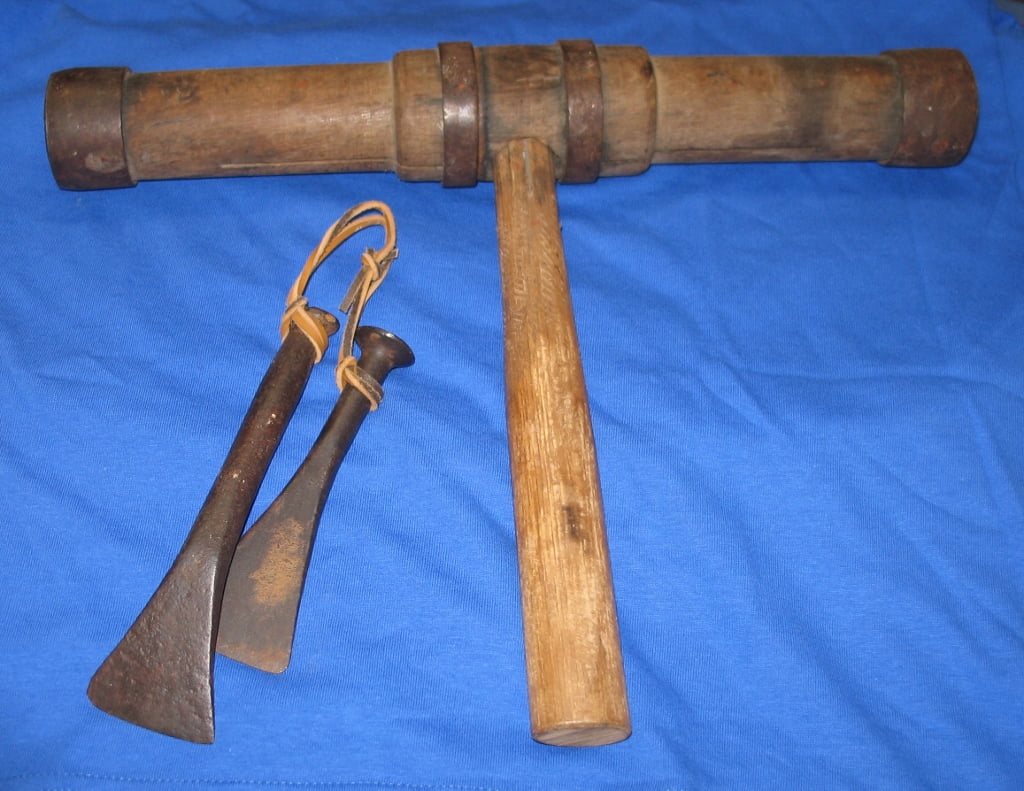
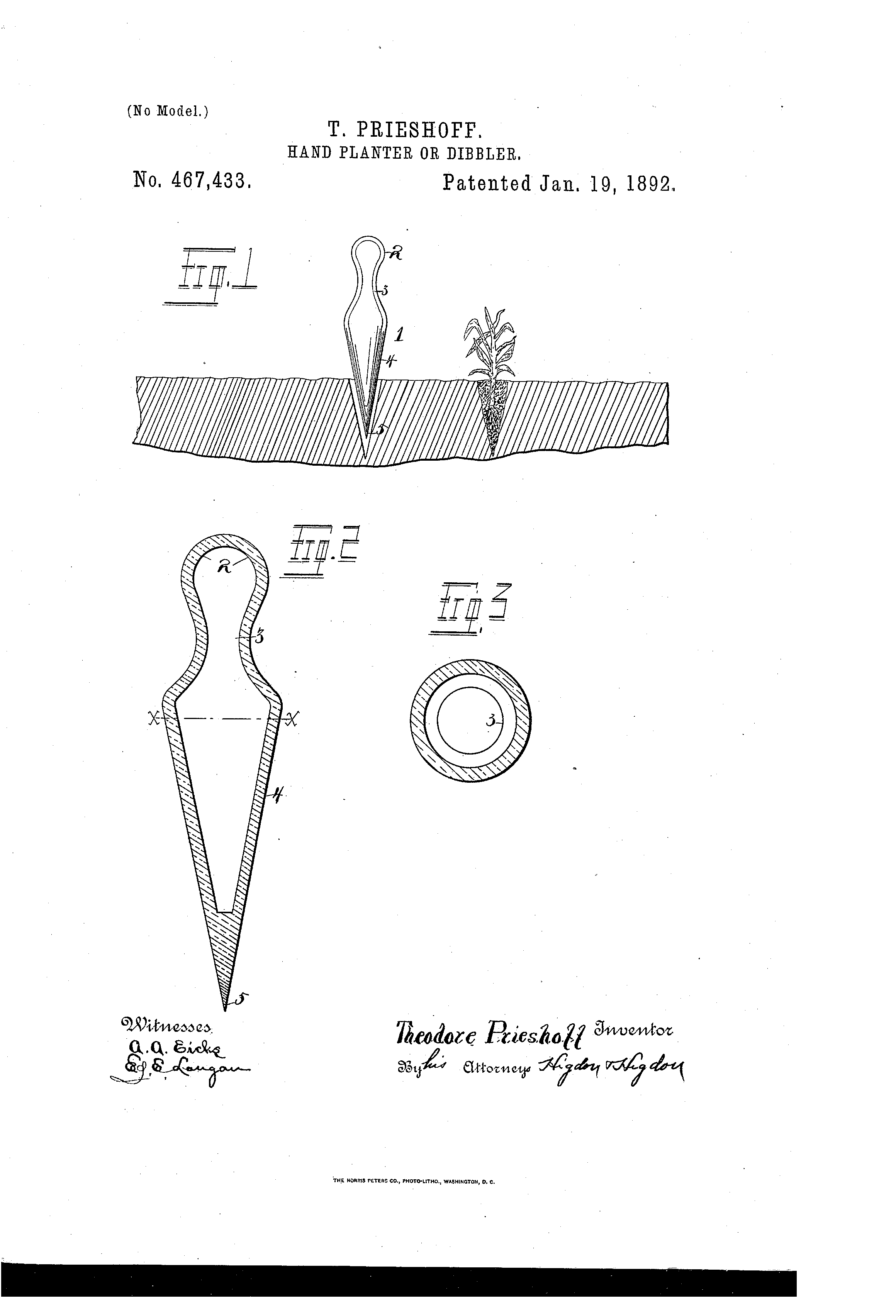
May 26-30: Dibbler
This particular dibbler is unusual because it is attached to a handle. This addition would have made it easier for the hard-working farmer to create multiple holes at a time while standing up. Here, Hammer Museum intern Emily demonstrates how to use our dibbler.
|
May 19-23: Autopsy Hammer One of our many |
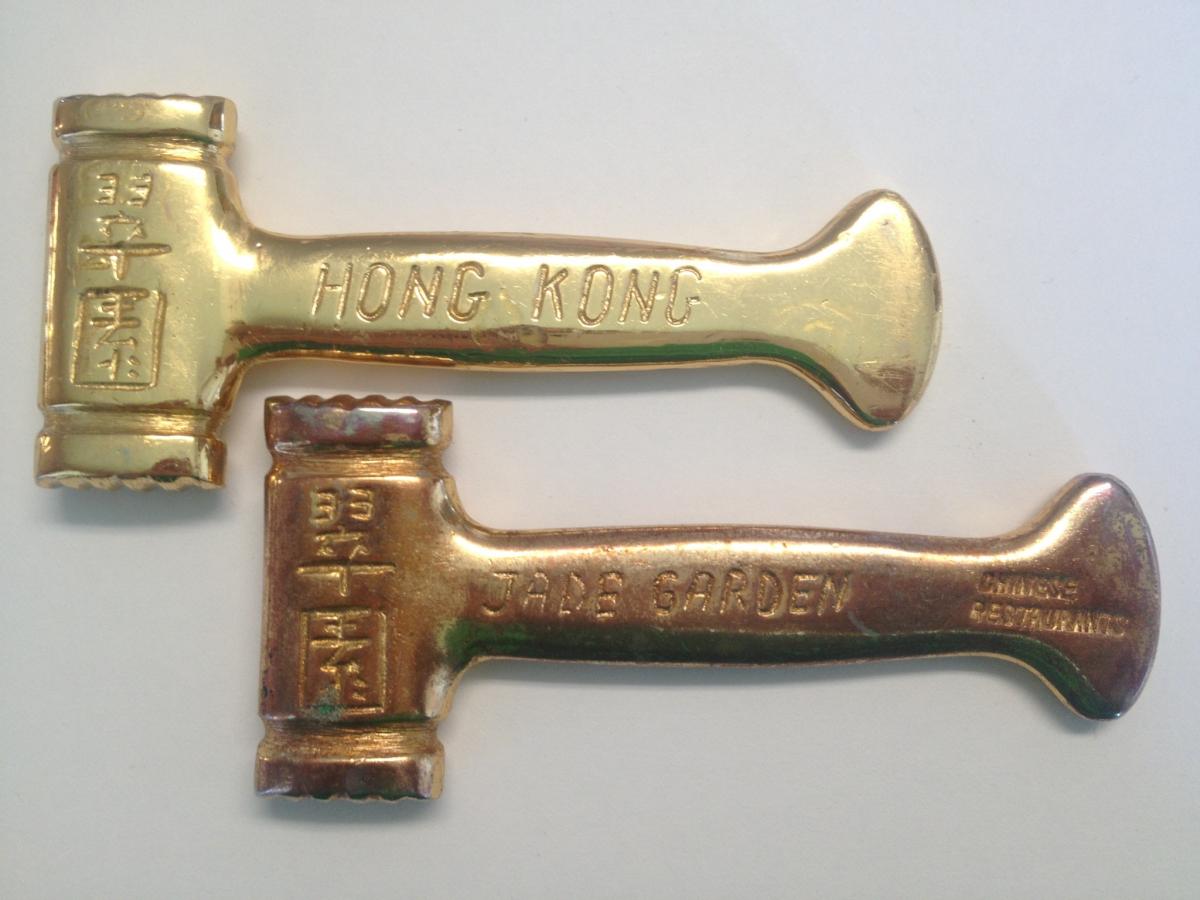
 What do PEZ dispensers and hammers have in common?
 We have many types of advertising hammers in our museum, but perhaps one of the strangest is the C.H. Fargo & Company’s “Ball-Bearing” Bicycle Shoes hammer.


 In celebration of the coming start of the salmon fishing season here in Southeast Alaska, our hammer of the week is a fish bonker. While this hammer was specifically designed for getting fish to lie still in the boat, lots of objects can serve as fish bonkers. Some folks carve their own out of wood and fill them with lead, while others use PVC pipes.

 This unique planting tool (date unknown) was hand-hewn from an unidentified wood. Typically, garden dibblers (also known as dibbers or dibbles), which were
  medical hammers, this particular autopsy hammer was used between 1862 and 1865. Once the skull had been sawed through, the hammer was used with a chisel to separate the calvarium from the rest of the skull. The hooked end was then used to pry the skull open. The hammer might also have been used to break other bones.
2013
JuneBeggar’s Chicken Hammer
To read one of the many legends about Beggar’s Chicken click the link here. For a copy of the recipe for Beggar’s Chicken that was displayed with our June Hammer of the Month click the link here. |
July5-in-1 Cocktail Tool
For the (usually) hot month of July, the featured hammer is one of our ice crushing mallets. Using hatchets, picks and mallets to break off and break up chunks of ice was common practice for centu…ries, especially when ice used to be delivered in great blocks to peoples homes. The Hammer Museum has several different varieties of these types of hammers. |
AugustShip’s Caulking Mallet and Irons
Check out the video we made to go with this exhibit display.
|
SeptemberAlmond Tree Knocker
For more information see our original blog post. |
.jpg)